The best ideas usually come to you out of the blue, popping into your head from nowhere. And this time was no different.
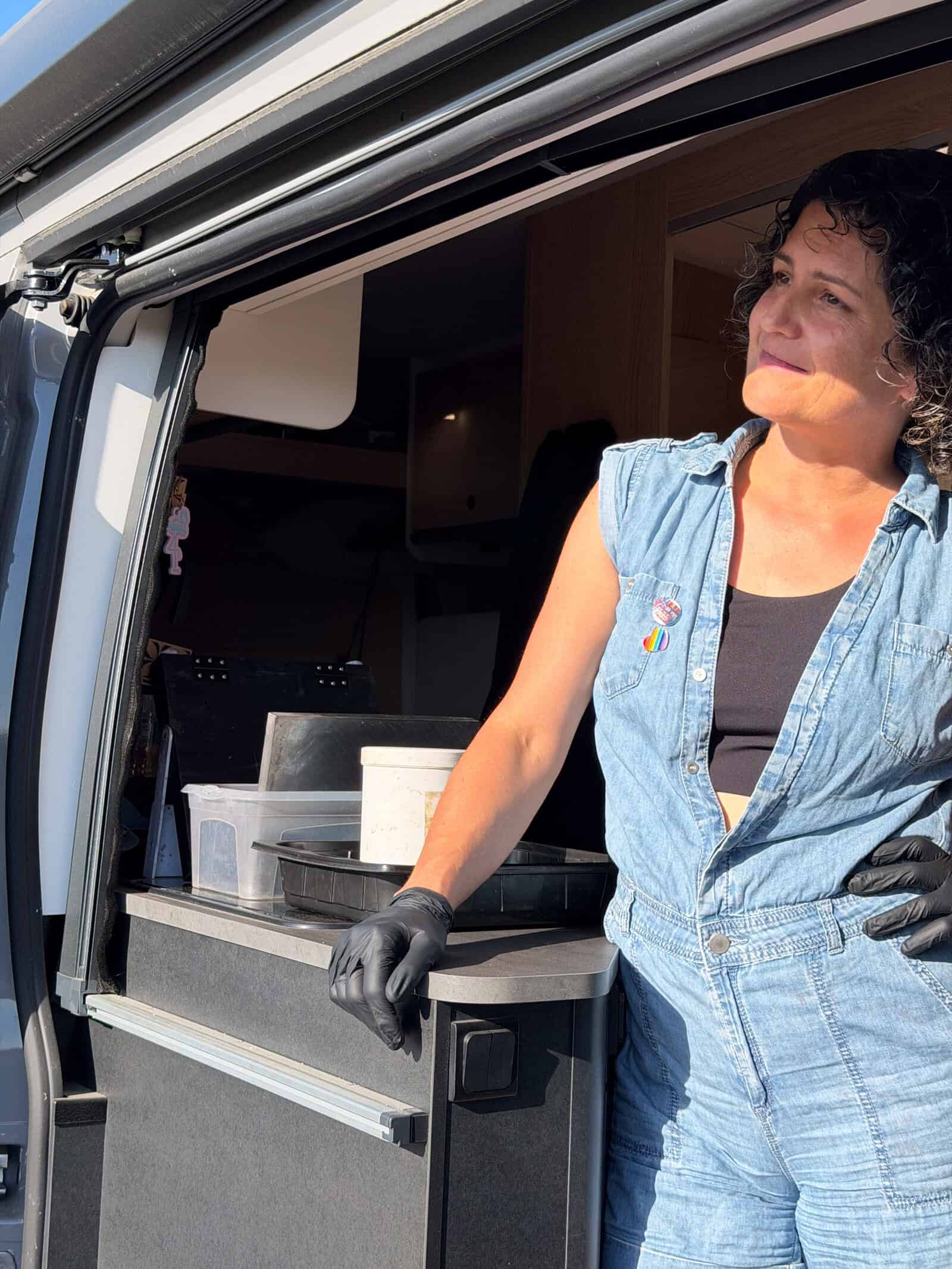
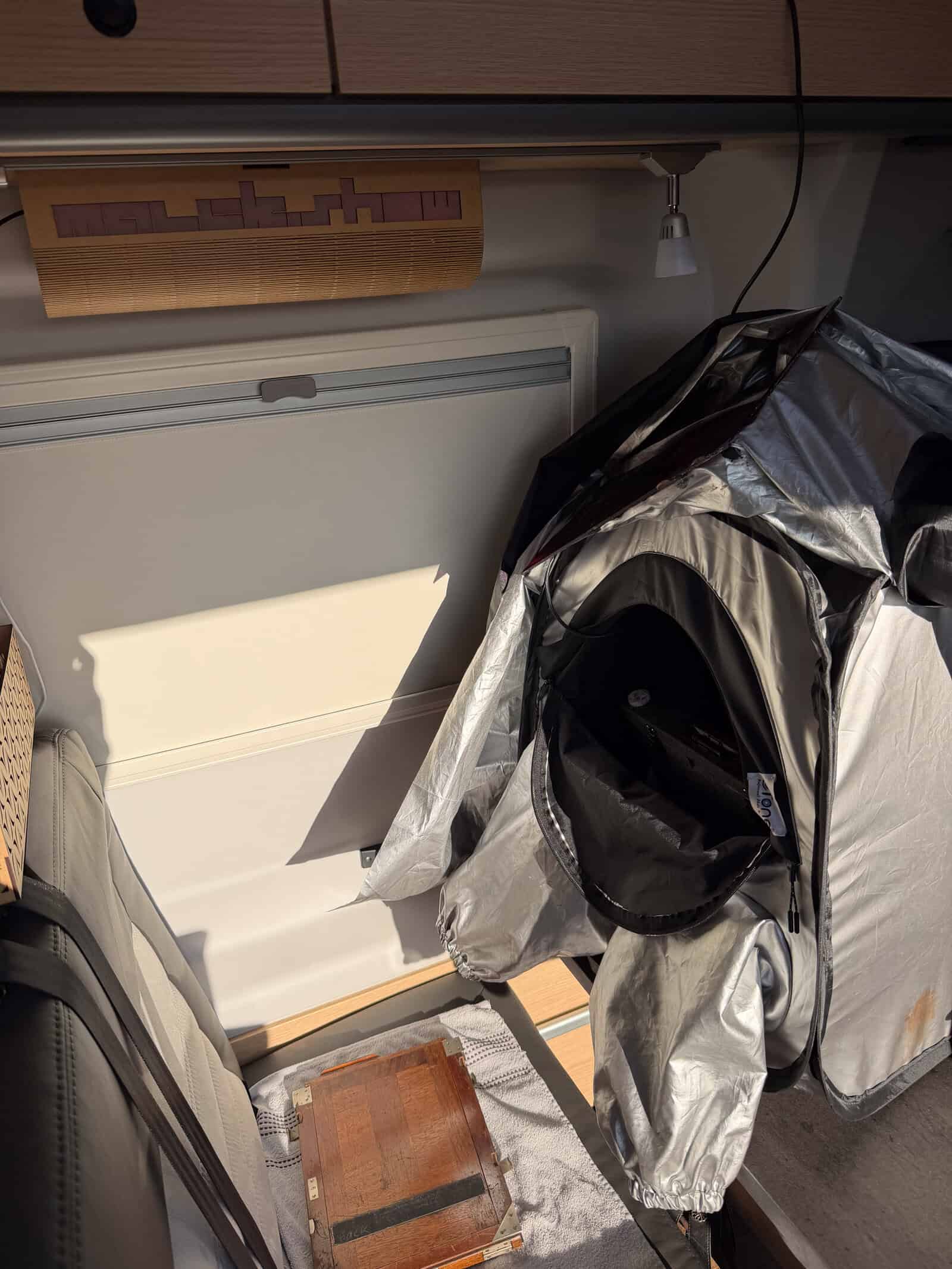
We were travelling in England for the solar eclipse, with our camper van and, of course, all our gear for taking photos. Alongside analogue film in medium and large format, we also had a complete darkroom for wet plate photography. We both brought our favourite cameras that we simply can’t do without – which meant that a few spare shoes had to stay behind when space got tight. Priorities have to be set, but if anyone understands that, it’s the readers of this blog.
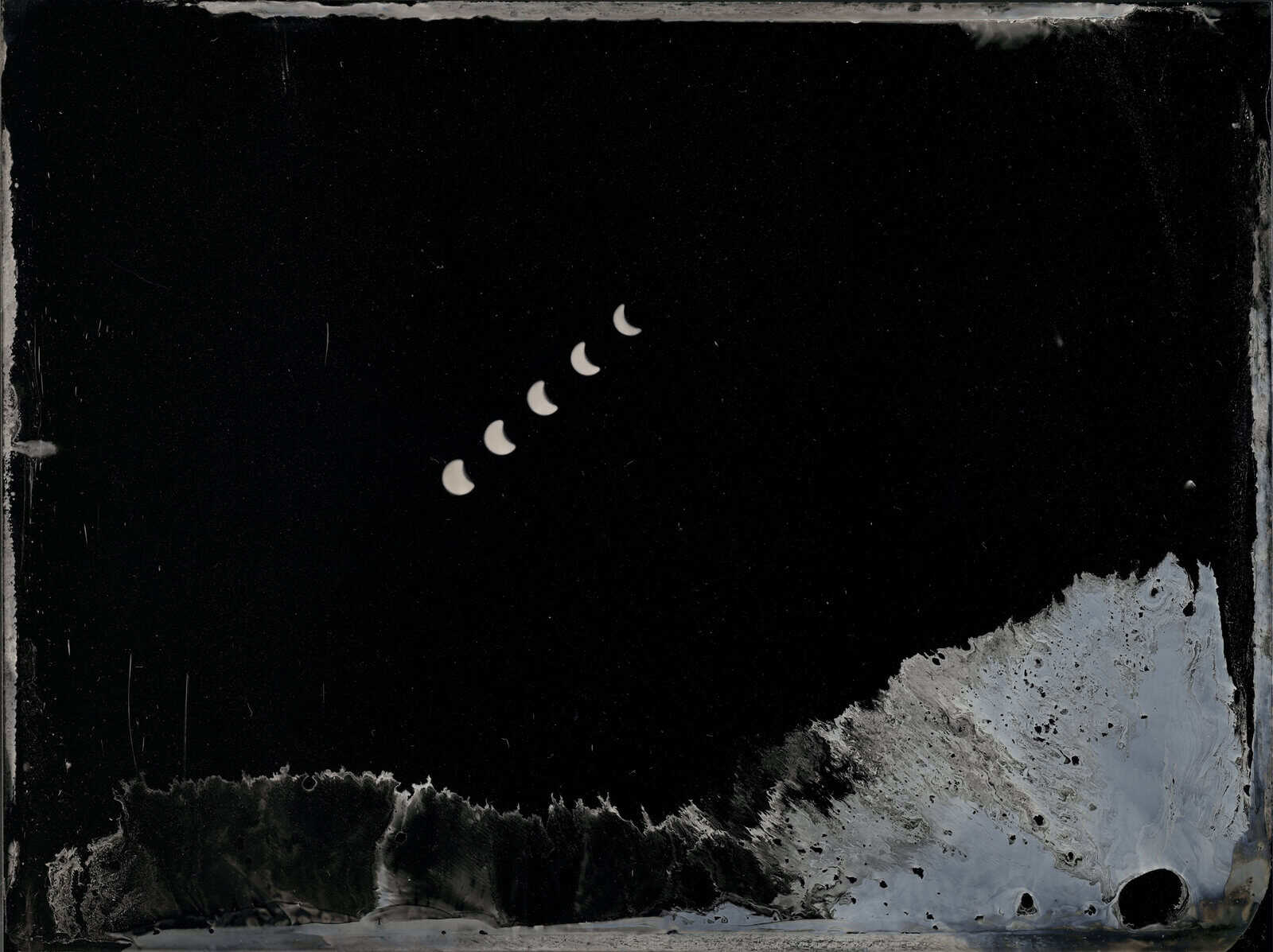
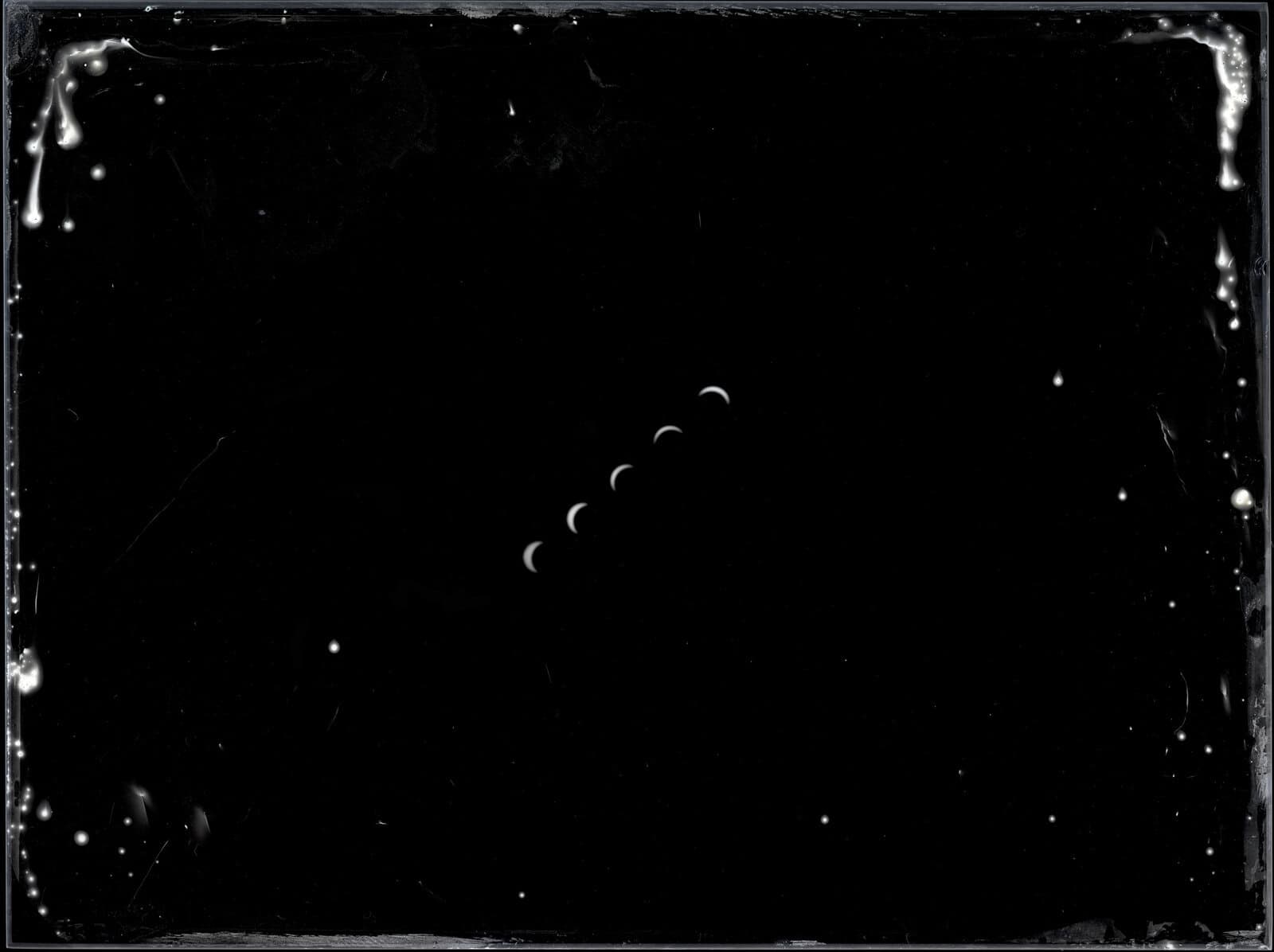
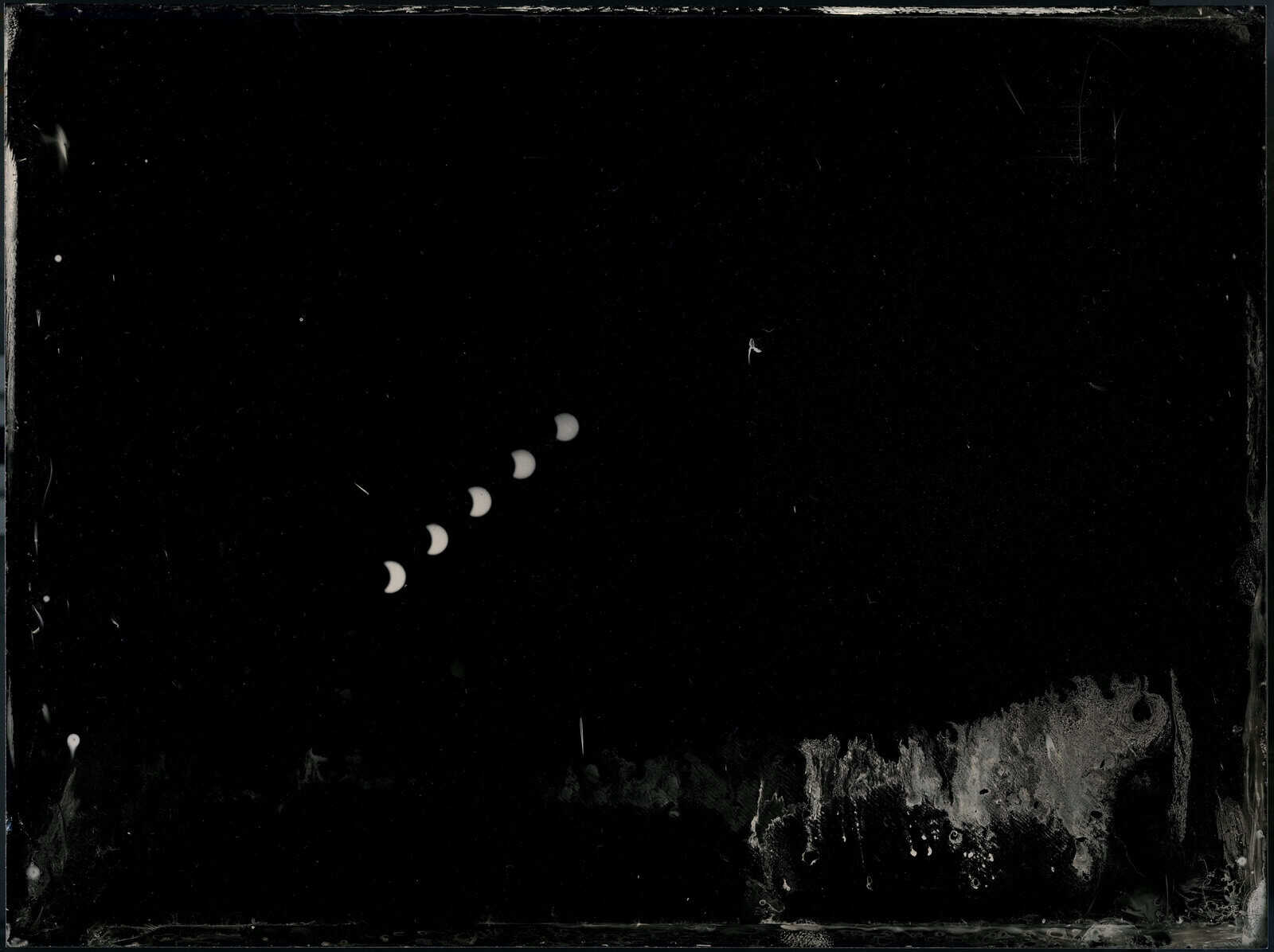
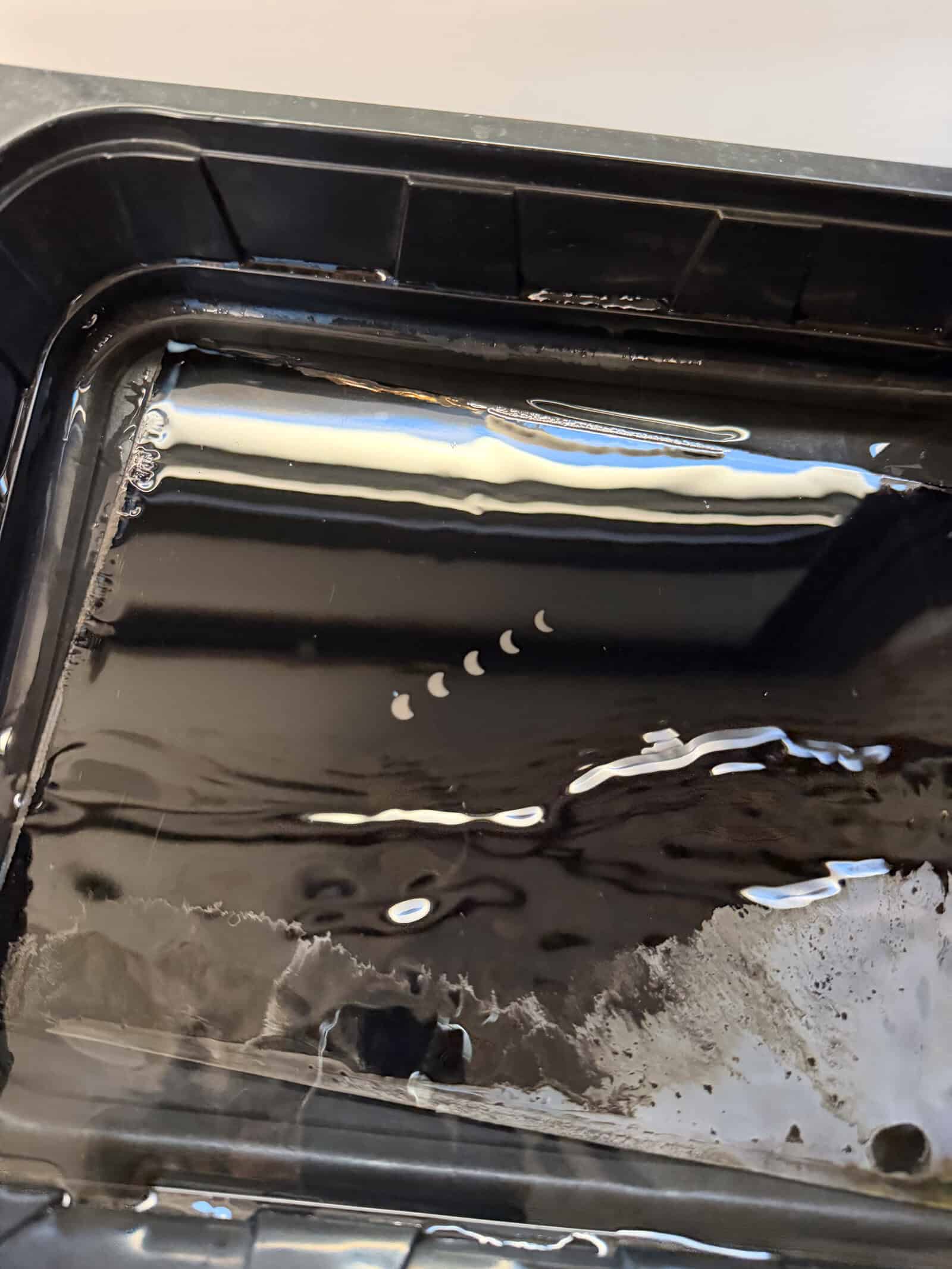
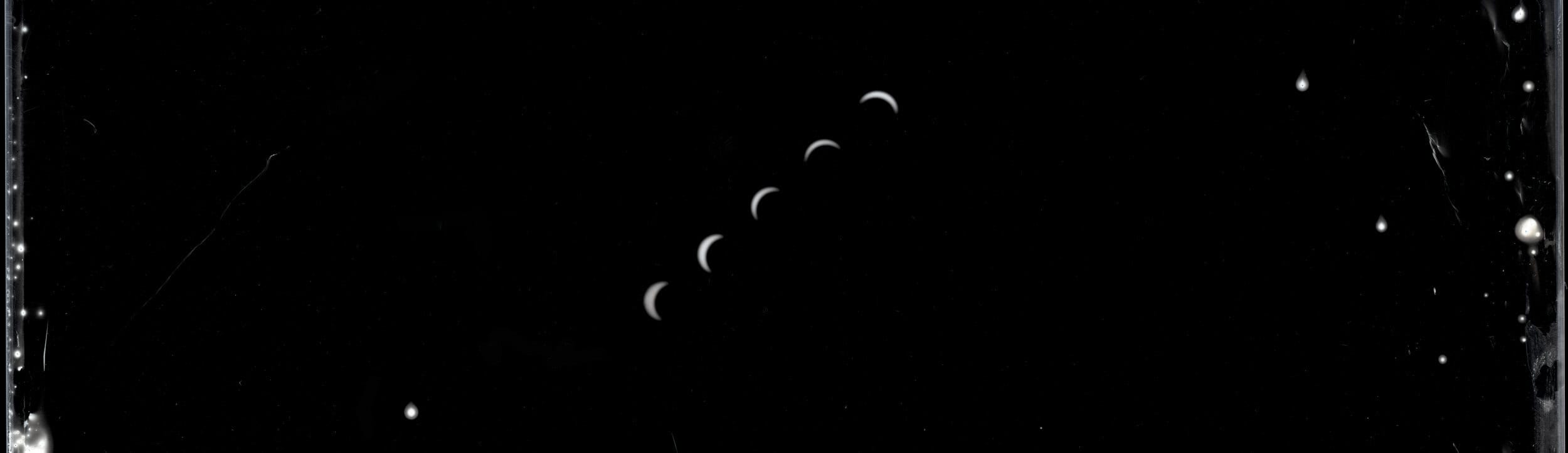
Two days before the eclipse, I realised that you need special glasses – and I obviously didn’t still have the ones from 1999, let alone have them with me… or you can make a pinhole camera to watch the projection. And that’s when – probably with a glass of fizz in hand – I said to my husband: wouldn’t it be funny to photograph the eclipse on a wet plate using a pinhole camera? Anyone who knows Claus-Peter knows that he accepts every challenge and usually raises the stakes. So why stop at one exposure? How about we photograph the whole progression? Five exposures per plate, four minutes apart – that’s 16 minutes per plate. A multiple exposure like that on an 18×24 cm plate would be something really special.
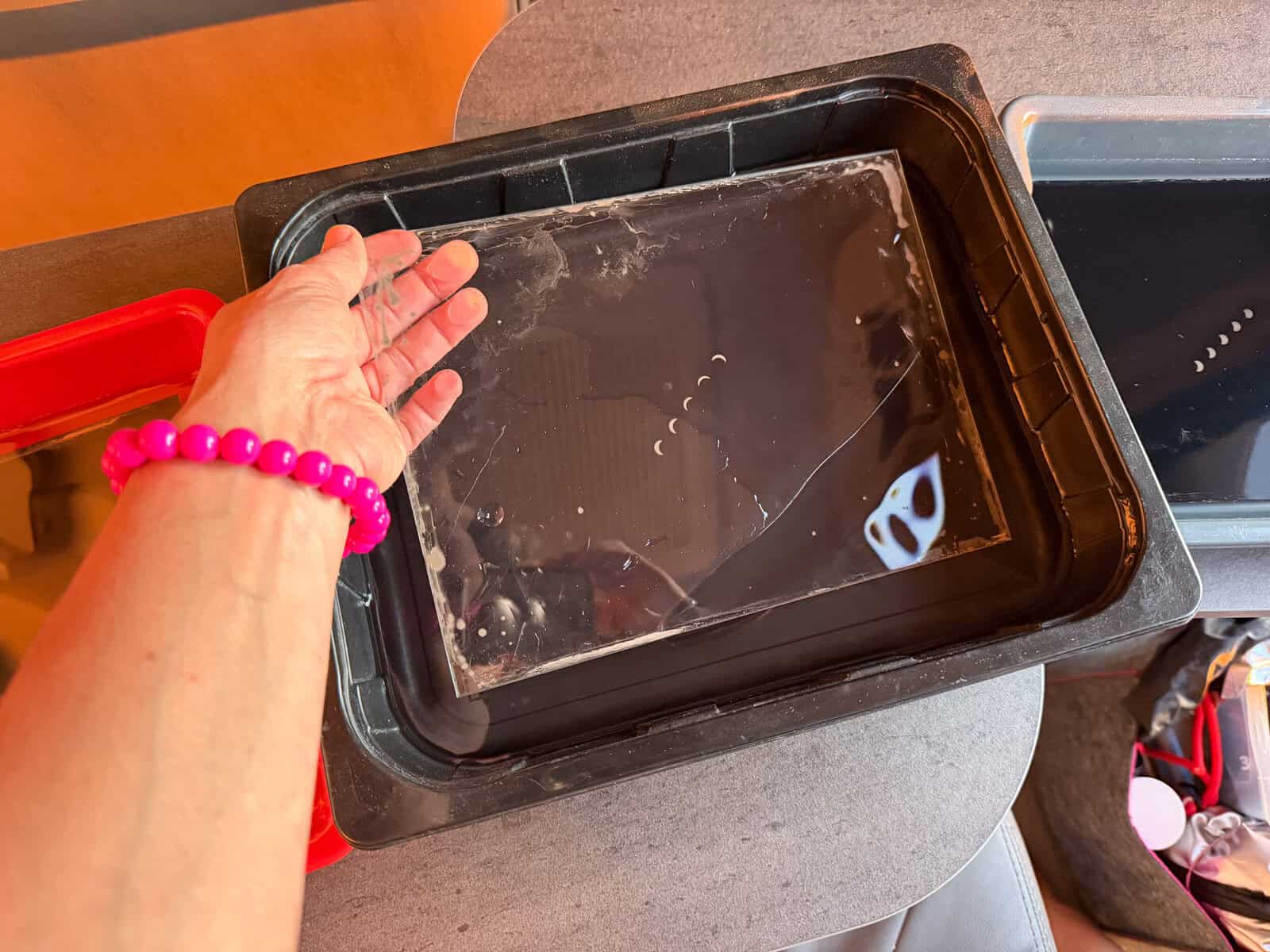
You have to bear in mind that it was about 30 degrees that day, we were standing in dust, and wet plates don’t like either of those things. Drying out is a problem, and dust is a nightmare. Normally, you should expose and develop a wet plate within ten minutes, otherwise it dries out and the image is lost. But there are a few tricks, of course. Luckily, our van has a fridge, so I could pour the chemicals onto the plates ice-cold, and the darkroom was set up right next to the camera. And so we actually managed to pull it off.
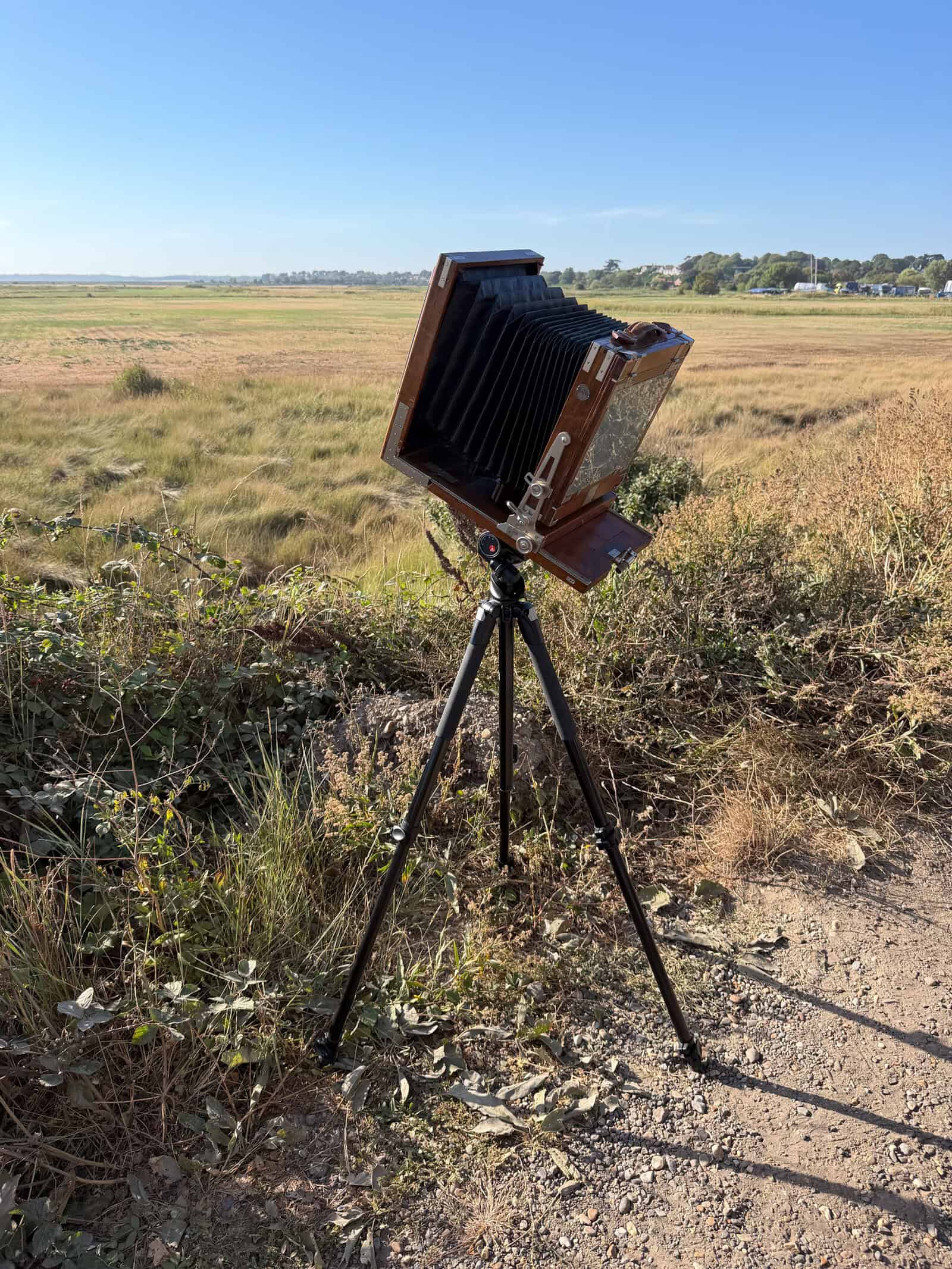
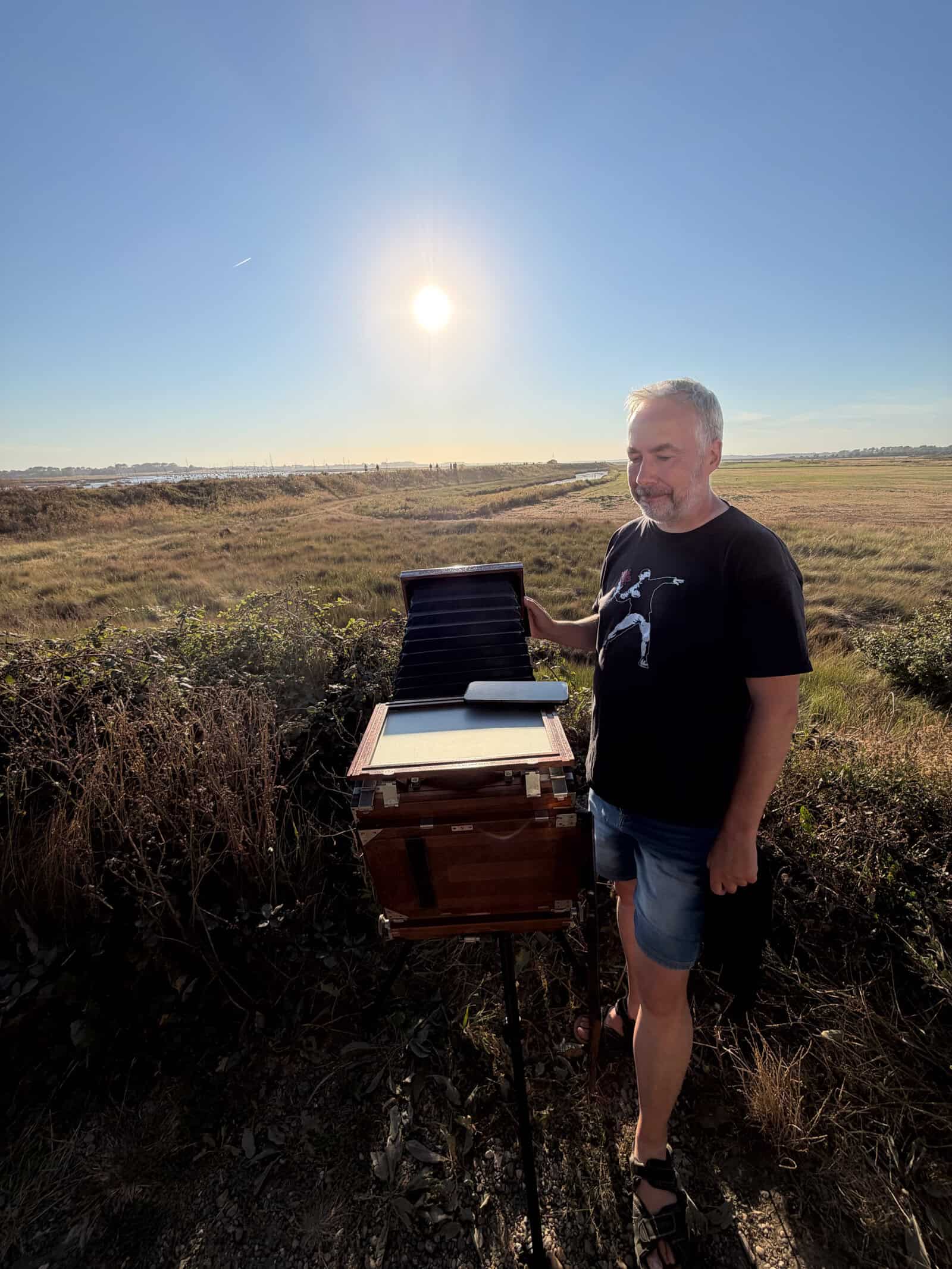
As our camera, we used our beloved Gretchen (though we also call her Berta) – the Raupp camera (got her from Jan Beenken). Instead of the historically correct lens, we simply put a pinhole in front of it. A can of beer was quickly emptied, a safety pin can always be found somewhere, and just like that, Gretchen was turned into a humble pinhole camera. She stood there like a statue and didn’t budge an inch until we had everything in the bag – in the heat, for a whole hour.
This camera is our absolute favourite.
And – we’re genuinely proud of the result. The corners had actually dried out a little, but funnily enough, that gives the illusion of mountains, which we really like too. This experience will stay with us forever, and as far as I can tell, I haven’t seen anything quite like it before.
Of course, there are wet plate images of solar eclipses out there, but I’ve mostly seen single exposures, not multiple exposures on glass. Not in this size.
I’ve seen plenty of photographers fail – there were a few videos on Instagram or Facebook – people burning their shutter curtains or putting holes straight through their film. Someone even used a dry plate, which only worked so-so. One person had the focusing screen of their large-format camera shatter (if I interpreted the video correctly).
It’s something special when, as a photographer, you come across new challenges and get to work on them as a team. Even better is when you can do it with your husband – who’s just as bonkers about photography as you are. On our own, neither of us would have managed it quite like this, but together it’s just easier – and always a little bit better.
Technical Details:
Camera: Raupp camera (Gretchen, formerly living with Jan Beenken)
Lens: Pinhole – safety pin in beer can aluminium
Exposure: 5 x ½ second, with 4-minute intervals in between – then straight on to the next plate
Material: 2 x black-coated aluminium (tintypes) and one glass plate (ambrotype). Each 18×24 cm. Collodion, silver bath, iron developer, fixer.